Posts Tagged ‘business’
Improv Should NOT Be a Surprise
My friend Rick Maue, a talented performer and innovator in the branch of stage magic called mentalism, identifies three types of performances:
- Theater, which is a show people come to see in a formal setting
- Entertainment at events such as banquets, where the performance is part of the overall evening’s activities
- Filler, where the audience has absolutely no idea you will be there or that there will be any kind of show
I’d like to add a fourth type: Hell, which is a Virgin Atlantic flight with musicians and improv comedians roaming the aisles. Don’t believe me? Here’s part of a Fast Company article describing the scheme:
Virgin Atlantic Little Red, a U.K. domestic rebranding of Virgin Atlantic, will feature “in-flight gigs” on selected flights that include live music and improv comedians. Entertainment will take place on flights headed to Edinburgh and Manchester, and performers will be selected from the talent pool at the Edinburgh Fringe Festival.
But here’s the kicker: While the acts will be mentioned on Virgin Atlantic’s Facebook and Twitter pages, the flights they will be performing on will be a surprise. We’re guessing that business travelers, improv comedy, and a confined environment will be a volatile mixture, but that’s just us.
I do improv and stage magic and think I’m pretty entertaining, but I only take a few strolling mentalism gigs at company parties a year. I want to be sure I’ll be a good fit and often look for reasons to break off from a group early rather than overstay my welcome. I don’t want to be what sports commentator Joe Buck refers to as “the guy at parties who insists on doing card tricks no one wants to see”. I don’t mind stopping to watch a street performer for a few minutes. In fact, I tipped a terrific human statue when my wife and I were in Tallinn, Estonia, in July.
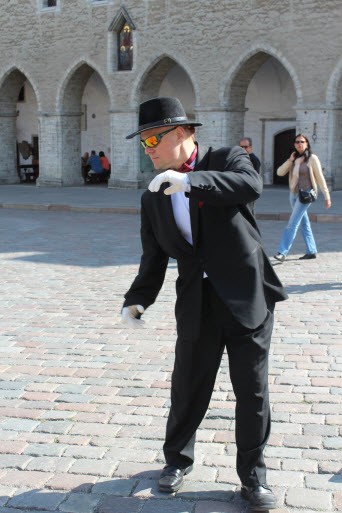
I’d rather donate three pints of blood in an hour than be on a flight with a live musician or improvisers. I’m one of you, guys, and I don’t begrudge you the money, but I will not interact with you.
I think someone in Virgin corporate learned the wrong lesson from the funny PA announcements some Southwest flight attendants make. Those presentations work because they’re fast, they’re hilarious, and they’re over.
Gamification: Ethics, Disney, and Playbor
It’s always seemed somewhat ironic that discussions of most systems, from gamification to genetic modification, always leave the issue of ethics until near the end. Of course, you can’t discuss the ethics of something until you have a clear idea of what it is you’re examining, so it might be a necessary evil.
In For the Win, Wharton business school professors Kevin Werbach and Dan Hunter (and Werbach in his Gamification course on Coursera) examine the ethics of gamification. The childhood saying is that anything’s fun until someone loses an eye, but gamification can have a manipulative side. Werbach and Hunter refer to the practice of using gamification to amplify work effort as playbor, a terrific term that captures the essence of their critique.
One example Werbach mentions in both the book and the course is Disney’s use of a leaderboard to display performance statistics for workers in their laundry facilities. One of the basic tenets of business is that “if you can’t measure it, you can’t manage it”, but there’s a real question as to when you cross the line from performance measurement to manipulation. When I had a summer job with a telemarketing firm back in the 1980s, did my target call, contact, and sale numbers amount to manipulation? How about sales quotas for bonuses? Or entering in at least a certain number of books per hour when I took a temp job helping a large independent bookstore digitize their inventory? In neither case was I compared directly to other employees (I was the only salesperson at a very small company), so it probably wasn’t an example of gamification, though I was aware of my performance in relation to my targets.
Ethics is always a tricky subject. In many cases, workplace treatment comes down to what can be negotiated between workers and management, either through union representatives or by workers voting with their feet. In a down economy, many workers are willing to accept conditions they wouldn’t consider in better times. There have been several articles on conditions in Amazon warehouses as well as a recent report on what might be an Amazon warehouse, that remind us how circumstances can give employers leverage over their employees.
Gamification: Deploy the Appropriate Tools
My previous set of posts described elements of gamification (such as meaningful choices and conflict) and how to incorporate them into business and improv. Kevin Werbach and his coauthor Dan Hunter also identify six steps to gamification (For the Win, p. 86), which I think provide an excellent framework for business and theatrical endeavors. I took a wild stab at designing for fun in my last post. In this post, I’ll talk about deploying the appropriate tools.
As a quick review, the authors’ six D’s are:
- Define business objectives
- Delineate target behaviors
- Describe your players
- Devise activity cycles
- Don’t forget the fun!
- Deploy the appropriate tools
Deploying the appropriate tools is where the cool concepts you’ve brought together become a system you can poke, prod, enter data into, and get feedback from. If you’re measuring data entry, you can automate the process. If you’re measuring geographic information or activity, you might program a mobile app to capture the data automatically. Otherwise, you need to create a system that combines automatic data collection with user entry. The specifics will change based on your environment and resources, but bear in mind that almost any system will require a significant investment of time, money, or both.
In an improv context, deploying the appropriate tools occurs in the context of creating your show and presenting your product. How you present your performances, from your venue to your costumes and format, shapes your audience’s expectations and reactions. Much improv comedy happens in restaurants, bars, and other spaces where the performance is secondary to the venue’s revenue stream. The venue often provides the space in exchange for a little rent or in the hope that the performers’ friends will eat and drink during the show. All the performer needs to do is put on their dark colored top, jeans, and soft-soled black shoes to get going. Troupes with dedicated spaces must pay attention to audience seating, bathroom access, and availability of snacks, drinks, and swag to buy at the performance.
You also have to create feedback mechanisms for the audience and performers. As I’ve said in other contexts, the audience isn’t there for the performers’ sake — they attended the show to have an enjoyable night out. Even your best friends wouldn’t see more than one show if the experience was so dire they didn’t enjoy themselves. You can get feedback from troupe members sitting in the audience and, in addition to watching the show, paying careful attention to the audience’s reaction. It’s easy to develop “laughing ears” where every reaction, regardless of how small, seems like a standing ovation. A teammate in the seats can help you see and hear what the audience really thinks. It’s your job to listen.
I’ll close out this section on gamification with a look at ethical considerations. Is it possible to use game mechanics to oppress your workers? Oh, yes…
Gamification: Devising Activity Cycles
My previous set of posts described elements of gamification (such as meaningful choices and conflict) and how to incorporate them into business and improv. Kevin Werbach and his coauthor Dan Hunter also identify six steps to gamification (For the Win, p. 86), which I think provide an excellent framework for business and theatrical endeavors. I just examined how you can describe your players using personas. In this post, I’ll talk about devising activity cycles.
As a quick review, the authors’ six D’s are:
- Define business objectives
- Delineate target behaviors
- Describe your players
- Devise activity cycles
- Don’t forget the fun!
- Deploy the appropriate tools
In a gamification context, activity cycles are the actions you want your players (teammates, customers, co-workers, etc.) to take. You can think of activity cycles as patterns of interaction with your site that represent a task or series of tasks taken to completion. As an example, consider how you check in at sites on FourSquare. Your activity cycle involves pulling up the app on your phone, having it sense your location, and giving it permission to check you in at that location. You can also earn badges, receive special offers, and be named Mayor of a location by checking in there more than everyone else.
Some sites have longer activity cycles. TeamSnap offers a website where you can track your sports teams’ rosters, schedule practices, track attendance, and record game results. You can even assign team members (or their parents) tasks such as bringing snacks to the game. TeamSnap’s also useful for improv groups who want to track practices, send messages, and schedule shows. (Full disclosure: I’m good friends with several TeamSnap executives and my main improv group, ComedySportz Portland, uses their site to track our activities.)
Businesses have activity cycles in all aspects of their operations. Client generation, sales tracking, and customer service all lend themselves to gamification. In some sense, businesses that track sales performance and use other measures to rank their employees already use elements of gamification, but many times those scenarios take on the tenor of the “motivational speech” Alec Baldwin’s character Blake delivers at the start of a monthly sales contest in the film version of Glengarry Glen Ross. In that contest, first place is a Cadillac El Dorado, second place is a set of steak knives, and third place is “You’re fired.”
Some bosses thrive on intimidation and insult, but that approach goes against the spirit of gamification. If you want to gamify successfully, you can’t forget the fun.
Gamification: The Six D’s
I’m most of the way through the Gamification course I’m taking on Coursera. I’ve learned a lot and hope to apply some of the techniques in my own work.
Much of the course’s material appears in For the Win, written by the Coursera professor Kevin Werbach and his coauthor Dan Hunter (both of whom are faculty members at the University of Pennsylvania’s Wharton School). My previous four posts discussed four elements of gamification (such as meaningful choices and conflict) and how to incorporate them into business and improv. The authors also identify six steps to gamification (For the Win, p. 86), which I think provide an excellent framework for business and theatrical endeavors.
The authors’ six D’s are:
- Define business objectives
- Delineate target behaviors
- Describe your players
- Devise activity cycles
- Don’t forget the fun!
- Deploy the appropriate tools
My next six posts will address these D’s one at a time, starting with how to define your objectives.
 Improspectives
You must be logged in to post a comment.